
With the Petaka you can transport live cells for long distances at normal ambient temperatures. Avoiding the necessity of freezing
or dry ice, large quantities of cells can be shipped international at a fraction of the price reducing logistics cost up to 80%. On
arrival, cells would have avoided the double handling & exposure to stress causing freezing media & enabling the cell culture
to be examined and expanded at the researchers own convenience
Average survival curve of anchorage dependent cell lines shipped in Petaka G3 at ambient temperature
Procedures and Protocols for ...
Required materials
Cells at mild hypoxia, inside Petaka, at normal temperatures, remain in a dormant state (pausing) for days, even weeks.
Viability
decreases progressively depending on the cell type. CHO-K1 cells, for example, can travel for 3 to 4 weeks maintaining 75% viability.
Some tumor cells, like HeLa, can travel for a month or more.



For anchorage independent cells
For anchorage dependent cells
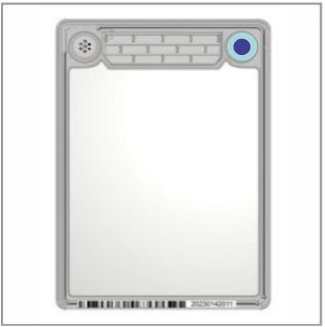
Petaka G3 LOT
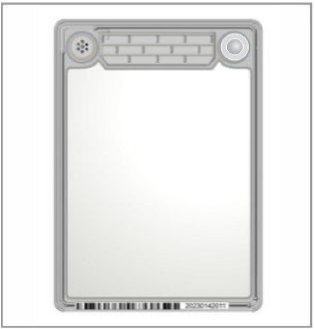
Petaka G3 FLAT
Celartia
Accesories
Celartia. Innovation and Progress
Tech Columbus 2011 award. USA
Outstanding Product, the Petaka bioreactor.
Celartia
974 Checkrein Av.
Columbus, Ohio 43229
United States
Email: support@celartia.com
Phone: +1 614 844 4900
Mobile: +1 614 975 1922
974 Checkrein Av.
Columbus, Ohio 43229
United States
Email: support@celartia.com
Phone: +1 614 844 4900
Mobile: +1 614 975 1922

How to use PetakaG3
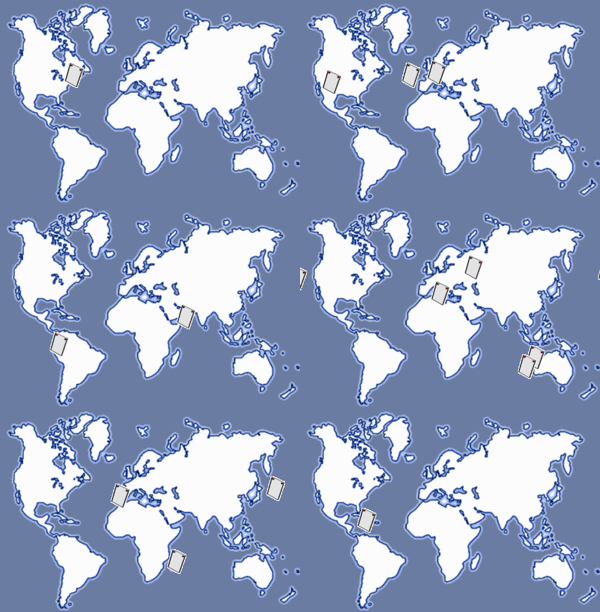
Shipping cells around the world. Safe, easy and low cost
Petaka does not need dry ice or refrigeration to transport cells.
Its slim shape permits easy packaging and protection.
Especially designed mailers are ideal for shipping one or two units. Hermetic without cap does not need protection with Parafilm
. Does not leak nor contamination risk.
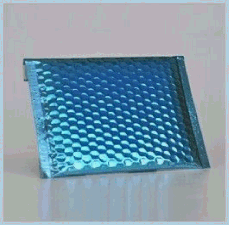
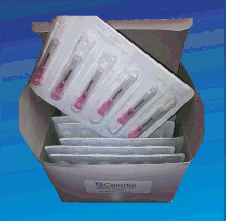
Mailers
Liquid transfer tips

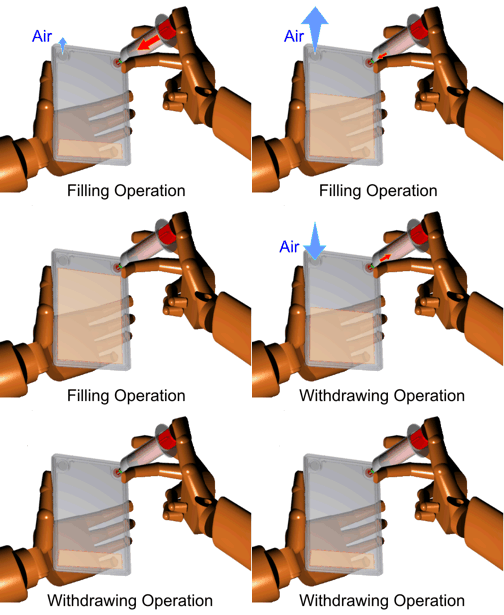
Filling and withdrawing, liquids always holding Petaka in vertical position !